
What is the circular economy?
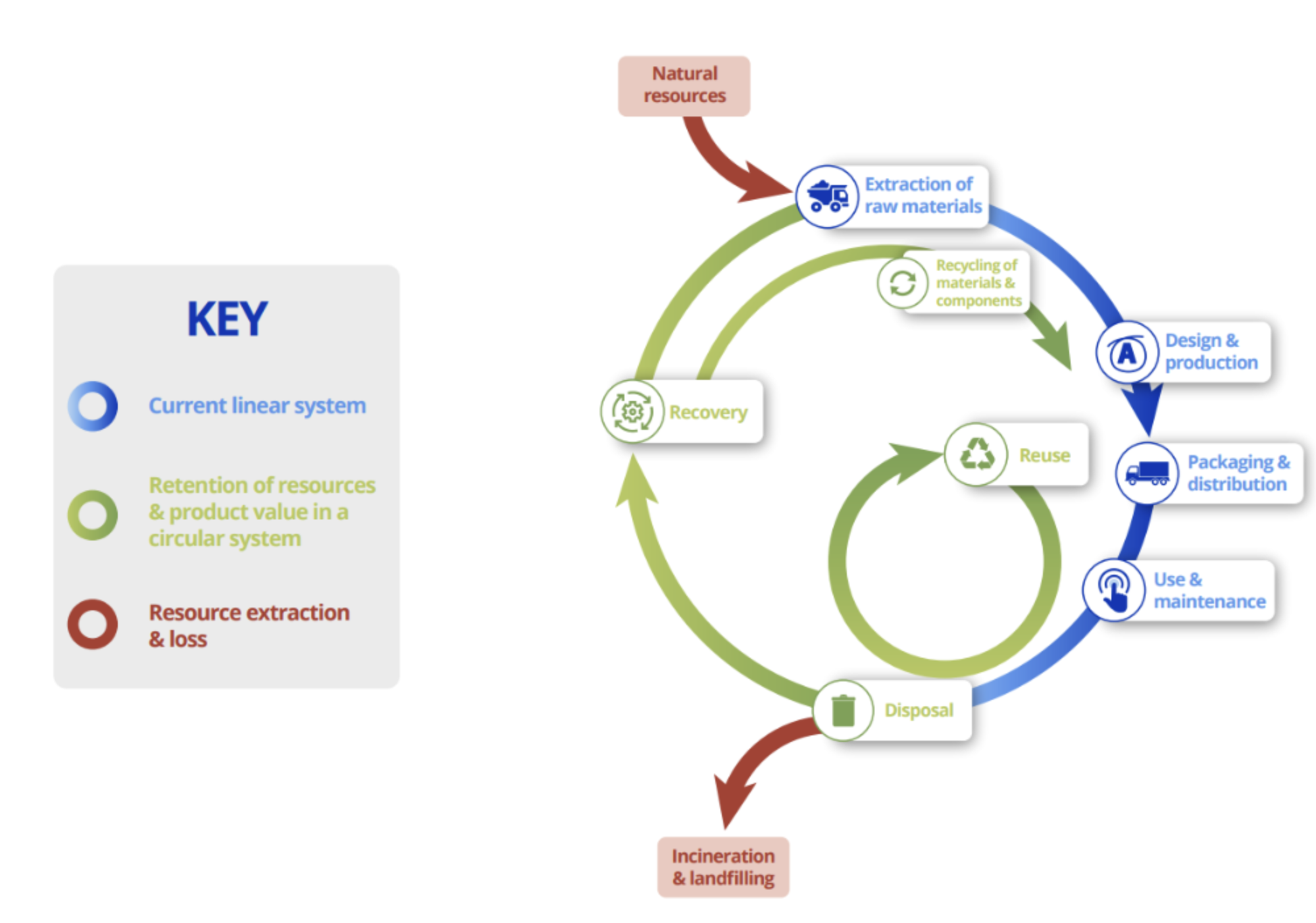
Unlike the traditional linear model of ‘extract – produce – consume – discard’, the circular economy offers a systemic approach that aims to keep resources in circulation for as long as possible. It seeks to extend the life of objects and materials, promote repair, reuse and recycling, and limit waste at every stage of the value chain.
By transforming waste into resources and optimising the use of raw materials, the circular economy helps reduce pressure on natural resources. It also reduces waste volumes and limits greenhouse gas emissions, while creating new economic and local opportunities.
What is Switzerland's policy framework for the circular economy?
Since 1 January 2025, Switzerland has strengthened its commitment to the circular economy with the entry into force of several legislative revisions, notably in the Environmental Protection Act, the Energy Act and the Public Procurement Act.
These reforms aim in particular to:
• Reduce environmental damage and the consumption of natural resources
• Strengthen the competitiveness of the Swiss economy
• Improve economic competitiveness while ensuring the country's security of supply
• Promote recycling rather than incineration
• Encourage responsible and sustainable public procurement
• Stimulate innovation in sectors related to the circular economy
The Confederation, the cantons and businesses are now called upon to work closely together to implement these principles.